
Laser Hair Removal or Electrolysis – Which Should You Choose? Key Differences and Comparison of Methods
Introduction
Are you tired of regular shaving or waxing and thinking about permanent hair removal? One of the most frequently asked questions is: laser hair removal or electrolysis – which should you choose? Both methods effectively reduce or completely remove unwanted hair, but they differ in how they work, their indications, and the duration of treatment.
At EPIL STUDIO in Kraków, we offer both laser hair removal using the advanced Candela GentleMax Pro and Lumenis LightSheer Quattro systems, as well as professional electrolysis with the Apilus xCell Pur device. This allows us to select the most suitable method based on your hair type, skin colour, treatment area, and individual expectations.
In this guide, we explain the differences between these two technologies, when laser hair removal is the better choice, when electrolysis is more suitable, and whether combining both methods may be beneficial in certain cases.
Table of Contents
- Laser Hair Removal vs Electrolysis – Key Differences
- How Does Laser Hair Removal Work?
- How Does Electrolysis Work?
- Which Is More Effective – Laser Hair Removal or Electrolysis?
- When Is Laser Hair Removal the Better Choice?
- When Is Electrolysis the Better Choice?
- Can Laser Hair Removal and Electrolysis Be Combined?
- How to Choose the Best Method?
- Frequently Asked Questions
- Summary
In Brief
- laser hair removal works best on larger areas of the body and darker hair;
- electrolysis removes individual hairs regardless of their colour and is recognised as a method of permanent hair removal;
- the laser targets many hair follicles at the same time, making treatments significantly faster;
- electrolysis requires more time but also removes blonde, grey, and red hair;
- in many cases, combining both methods in the right order provides the best results.
Laser Hair Removal vs Electrolysis – Key Differences

If you want permanent hair removal, choosing the right method should depend on several factors. These include your hair colour, skin phototype, treatment area, expected results, and the amount of time you can devote to the treatment.
Laser hair removal and electrolysis do not compete with each other—in many cases, they complement one another. Each method uses a different technology and has its own indications.
Comparison of Laser Hair Removal and Electrolysis
| Feature | Laser Hair Removal | Electrolysis |
|---|---|---|
| How it works | The laser destroys the hair follicle using energy absorbed by melanin. | A fine probe inserted into the hair follicle destroys it using an electrical impulse. |
| Hair type | Best results on dark hair. | Effective on dark, blonde, red, and grey hair. |
| Skin phototype | Parameters can be adjusted for different skin phototypes. | Skin colour does not affect the effectiveness of the treatment. |
| Large body areas | Yes — the treatment is fast and allows large areas of the body to be treated. | No — each hair is removed individually. |
| Small, precise areas | Good effectiveness. | Very high precision. |
| Number of treatments | Usually 6–8 treatments followed by maintenance sessions. | Depends on the number of hairs and their growth cycle. |
| Treatment duration | Short duration of each treatment session. | Considerably longer time needed to treat the area. |
| Best suited for | Legs, underarms, bikini area, arms, back, and larger body areas. | Face, chin, upper lip, individual hairs, and hairs remaining after laser hair removal. |
Laser hair removal and electrolysis use different hair removal technologies. Choosing the right method should be preceded by a consultation and an assessment of the hair type, skin phototype, and expected treatment results.
As you can see, laser hair removal makes it possible to treat large areas of the body quickly, which is why it is most often chosen by people planning to reduce hair on the legs, underarms, bikini area, or back.
Electrolysis, on the other hand, allows every individual hair to be removed regardless of its colour. That is why it is the best solution for blonde, red, grey hair, or hairs remaining after a series of laser hair removal treatments.
💡 EPIL STUDIO Specialist’s Tip
In practice, the best results are often achieved by combining both methods. First, a series of laser hair removal treatments is performed to quickly reduce most of the hair, and then electrolysis is used to remove the individual hairs that remain after the therapy is completed. This approach makes it possible to achieve the most permanent and aesthetically pleasing results.
How Does Laser Hair Removal Work?
Laser hair removal uses a concentrated beam of light that targets the melanin contained in the hair. The laser energy is converted into heat, damaging the hair follicle responsible for hair growth while leaving the surrounding tissues unharmed.

The best results are achieved when the hair is in the active growth phase (anagen). Since not all hairs grow at the same time, the treatment must be repeated several times at appropriate intervals.
At EPIL STUDIO in Kraków, we use two internationally recognised laser hair removal systems:
- Candela GentleMax Pro – an Alexandrite and Nd:YAG laser that enables effective hair removal for various skin phototypes;
- Lumenis LightSheer Quattro – a modern diode laser valued for its high effectiveness and treatment comfort.
Thanks to individually adjusted treatment parameters, the therapy is safe, precise, and tailored to each person’s needs.
When Does Laser Hair Removal Deliver the Best Results?
The highest effectiveness is observed in people with:
- dark hair containing a high amount of melanin;
- medium or coarse hair;
- treatments performed regularly according to the recommended schedule;
- no contraindications to laser therapy.
The greater the contrast between the hair colour and the skin, the more effectively the laser energy reaches the hair follicle.
💡 EPIL STUDIO Specialist’s Tip
Many people believe that all hair will disappear permanently after the very first treatment. In reality, the laser only affects hairs that are in the active growth phase, which is why a complete treatment plan usually includes 6–8 sessions performed at appropriate intervals.
Benefits of Laser Hair Removal
The main advantages of this method include:
- short duration of each treatment session;
- the ability to treat large areas of the body;
- high effectiveness on darker hair;
- gradual reduction in the density and thickness of regrowing hair;
- greater comfort thanks to advanced cooling systems used in medical-grade devices.
⚠️ Most Common Mistake
Some people stop the treatment after only 2–3 sessions because they notice significant improvement. This is too early. To achieve maximum hair reduction, it is necessary to complete the entire treatment series recommended by the specialist and, if needed, undergo maintenance treatments according to individual needs.
How Does Electrolysis Work?
Electrolysis is a method of permanent hair removal that works in a completely different way from laser treatment. During the procedure, the specialist inserts a very thin, sterile probe into the natural opening of the hair follicle and then delivers a precisely selected electrical impulse that permanently destroys the cells responsible for hair growth.

The greatest advantage of electrolysis is that it does not rely on melanin, which means it can remove hair regardless of its colour.
At EPIL STUDIO in Kraków, treatments are performed using the modern Apilus xCell Pur device, which allows highly precise adjustment of treatment parameters and increases patient comfort during the procedure.
When Is Electrolysis the Best Choice?
Electrolysis is particularly suitable when:
- the hair is blonde, grey, or red;
- individual hairs remain after laser hair removal;
- hair needs to be removed from small and highly precise areas;
- you want permanent removal of individual hairs.
The treatment is most commonly performed on areas such as:
- upper lip;
- chin;
- cheeks;
- neck;
- eyebrow area (while following appropriate safety guidelines);
- individual hairs on the body.
💡 EPIL STUDIO Specialist’s Tip
Electrolysis does not replace laser hair removal in every case. If you plan to remove hair from the legs, back, or entire arms, the treatment will be very time-consuming. In such situations, it is much better to begin with laser hair removal and then use electrolysis to remove the individual hairs that remain.
Benefits of Electrolysis
The main advantages of electrolysis include:
- the ability to remove hair of any colour;
- effectiveness regardless of skin phototype;
- very high precision;
- the ability to treat small areas;
- permanent removal of individual hairs.
⚠️ Most Common Mistake
Many people believe that electrolysis can remove all hair in a single appointment. Just like laser hair removal, hair grows in different phases, so achieving the full result requires a series of treatments performed according to an individual treatment plan.
Which Is More Effective – Laser Hair Removal or Electrolysis?
There is no single answer as to which method is better. Effectiveness depends primarily on the type of hair, the area of the body, and the expected results.
If the goal is to quickly reduce hair on large areas of the body, laser hair removal is definitely the better choice. However, in the case of blonde, grey, or individual hairs that the laser cannot effectively detect, electrolysis has the advantage.
In practice, both methods very often complement each other rather than compete with one another.
When Is Laser Hair Removal the Better Choice and When Is Electrolysis?
| Situation | Best Choice | Why? |
|---|---|---|
| Large body areas (legs, back, arms) | Laser Hair Removal | Allows a large area to be treated quickly during a single appointment. |
| Dark and coarse hair | Laser Hair Removal | Melanin effectively absorbs the laser energy. |
| Blonde, red, or grey hair | Electrolysis | Hair colour does not affect the effectiveness of the treatment. |
| Individual hairs remaining after a completed laser hair removal series | Electrolysis | Allows permanent removal of the remaining individual hairs. |
| Precise facial areas | Electrolysis | Allows individual hairs to be removed with very high precision. |
| Desire for fast hair reduction | Laser Hair Removal | Each pulse targets multiple hair follicles at the same time. |
| The most comprehensive result | Combination of Both Methods | Laser hair removal reduces most of the hair, while electrolysis removes the remaining individual hairs. |
The choice of the appropriate method depends on the hair type, skin phototype, treatment area, and expected results. During the consultation, the specialist helps select the therapy that best suits individual needs.
As the comparison above shows, laser hair removal and electrolysis have different applications. That is why, during a consultation, the goal is not to choose the “better” method, but the one that is most suitable for a particular case.
💡 EPIL STUDIO Specialist’s Tip
Combination therapy is becoming increasingly common. First, a series of laser hair removal treatments is performed to remove most of the dark hair. Then, electrolysis is used to precisely eliminate individual blonde or resistant hairs, making the final result even more satisfying.
When Should You Choose Laser Hair Removal?
Laser hair removal is the best solution for people who want to quickly reduce hair on larger areas of the body. Because a single laser pulse targets multiple hair follicles at the same time, treatments are relatively short and can produce noticeable results after the first few sessions.
It works best for people with dark hair containing a high amount of melanin, as this pigment is responsible for effectively absorbing the laser energy.
Laser hair removal is a good choice if:
- you want to remove hair from the legs, underarms, bikini area, arms, or back;
- you have dark or medium-dark hair;
- you want a short treatment time;
- you expect significant hair reduction over large areas;
- you plan to undergo treatments regularly according to the recommended schedule.
💡 EPIL STUDIO Specialist’s Tip
Laser hair removal is usually the first choice when the goal is to reduce hair on larger areas of the body. It shortens the overall treatment time and significantly reduces the amount of regrowing hair.
When Is Electrolysis the Better Choice?
Although electrolysis requires greater precision and more time, in many situations it is the only effective method of permanent hair removal.
The greatest advantage of this technology is its ability to remove hair regardless of its colour. This means the treatment can also be performed on blonde, grey, or red hair, which contains too little melanin to respond effectively to laser light.
Electrolysis is the best solution if:
- you want to remove blonde, grey, or red hair;
- individual hairs remain after completing a series of laser hair removal treatments;
- you need very precise treatment of a small area;
- the concern mainly involves the face, chin, upper lip, or neck;
- you want permanent removal of individual hairs.
💡 EPIL STUDIO Specialist’s Tip
Electrolysis is an excellent complement to laser hair removal. After completing laser therapy, a small number of hairs often remain, and these can be effectively removed using electrolysis. As a result, the final outcome is more complete and longer-lasting.
⚠️ Most Common Mistake
It is not worth choosing electrolysis simply because it is considered a permanent hair removal method. For large body areas such as the legs or back, the treatment can be very time-consuming. For this reason, the decision should be made after consulting a specialist who will recommend the most appropriate method based on the hair type and treatment area.
Can Laser Hair Removal and Electrolysis Be Combined?
Yes. In many cases, combining laser hair removal and electrolysis provides the best results. The two methods work differently, which is why they can complement each other at different stages of the treatment.
The treatment plan most often follows this pattern:
- Laser hair removal quickly reduces most of the dark hair in the selected area.
- After completing the treatment series, a few individual hairs may remain because they are too light, too fine, or resistant to laser treatment.
- Electrolysis is then performed to permanently remove the remaining hairs.
This approach shortens the overall treatment time and provides a more aesthetically pleasing final result.
When Is It Worth Combining Both Methods?
Combining laser hair removal and electrolysis is particularly recommended when:
- most of the hair is dark, but there are also individual blonde or grey hairs;
- a small number of regrowing hairs remain after completing a laser hair removal series;
- you want to achieve the most precise result possible;
- you want to limit the number of electrolysis treatments only to the areas where they are truly needed.
💡 EPIL STUDIO Specialist’s Tip
During the consultation, we assess the hair type, skin phototype, and treatment area. This allows us to recommend therapy based solely on laser hair removal, solely on electrolysis, or a combination of both methods if that is the most beneficial solution.
How to Choose the Best Method?
There is no single method that is best for everyone. The right choice depends on many factors, which is why it is worth starting with a consultation with a specialist.
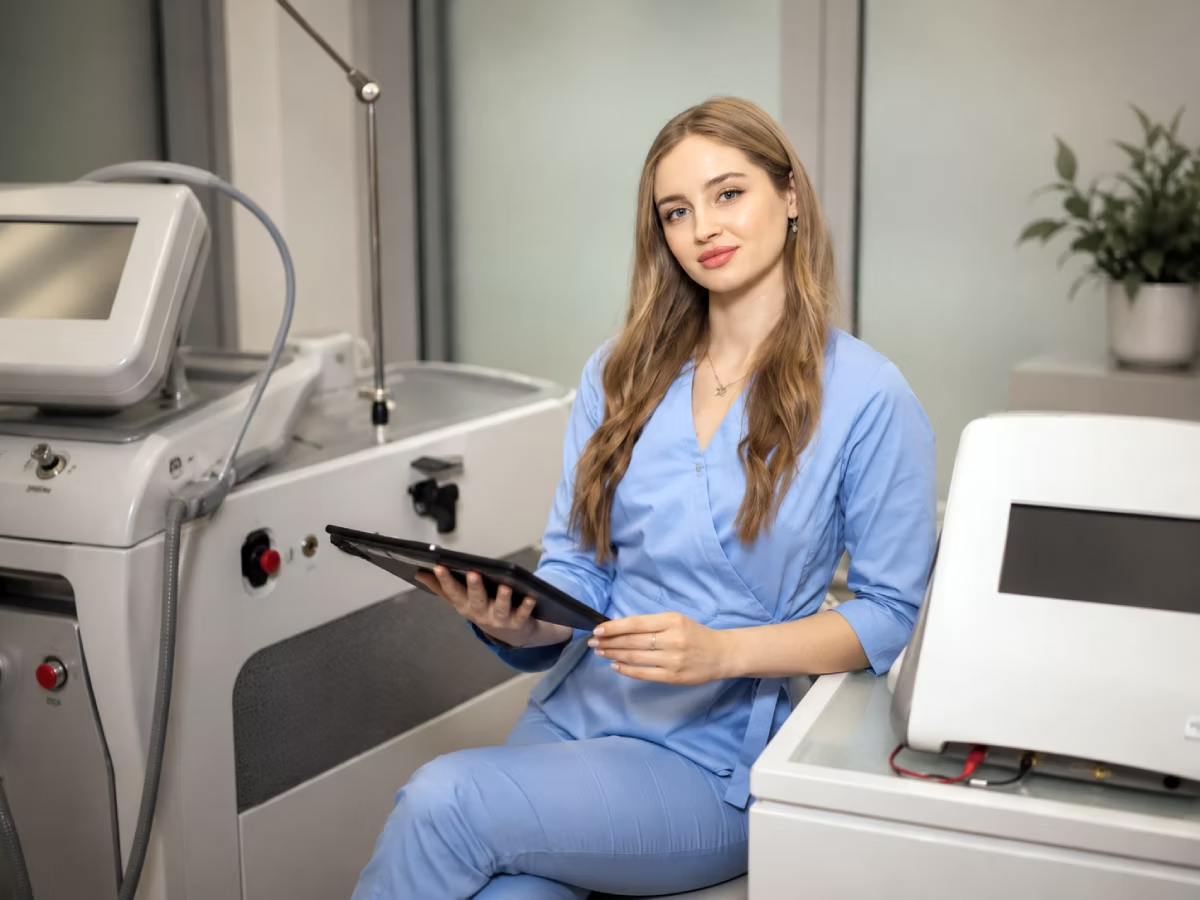
During the consultation, the following factors are taken into account:
- hair colour, thickness, and density;
- skin phototype;
- the treatment area;
- previous hair removal experience;
- the expected results and the amount of time you can dedicate to the treatment.
At EPIL STUDIO in Kraków, we do not follow a single treatment plan for every client. Every treatment plan is prepared individually to ensure the highest possible effectiveness and safety.
⚠️ Most Common Mistake
Choosing a method based solely on friends’ opinions or information found on the internet. What worked well for one person may not be the best solution in your case. A professional consultation makes it possible to choose a treatment tailored to your hair type, skin, and expected results.
Frequently Asked Questions
Is laser hair removal better than electrolysis?
There is no single answer. Laser hair removal works best for large body areas and dark hair, while electrolysis is also effective for blonde, red, and grey hair.
Does electrolysis remove hair permanently?
Electrolysis is recognised as a permanent hair removal method. However, to achieve the full result, a series of treatments performed according to the hair growth cycle is required.
Can hair grow back after laser hair removal?
Yes. Some hair follicles may become active again over time due to hormonal changes or other factors. For this reason, maintenance treatments are recommended for some people.
Can laser hair removal remove blonde or grey hair?
No. Laser hair removal works most effectively on hair containing melanin. For very blonde, red, or grey hair, electrolysis is the better solution.
Can I have laser hair removal first and electrolysis later?
Yes. This is a very common approach. Laser hair removal reduces most of the hair, while electrolysis removes the individual hairs that remain after completing the treatment.
Which method is less time-consuming?
Laser hair removal. A single laser pulse targets multiple hair follicles at the same time, so treatments take significantly less time than electrolysis.
Is electrolysis more painful than laser hair removal?
The sensation is individual. Electrolysis treats each hair separately, so on larger areas it may be perceived as more demanding.
How many laser hair removal treatments are needed?
A series of 6–8 treatments is most commonly recommended, although the exact number of sessions depends on the hair type, treatment area, and the individual’s response.
Can everyone undergo laser hair removal or electrolysis?
A consultation is required before starting treatment. The specialist assesses the condition of the skin, hair type, and any contraindications to the procedure.
Which method should I choose if I don’t know which one is right for me?
The best solution is to book a consultation at the clinic. The specialist will help you choose the right method or recommend combining laser hair removal and electrolysis if it is the most beneficial option.
Summary
Laser hair removal and electrolysis are two effective methods of hair reduction, but each has different applications. Laser hair removal is ideal for large body areas and dark hair, while electrolysis effectively removes blonde, grey, red, and individual hairs regardless of their colour.
At EPIL STUDIO, we use Candela GentleMax Pro, Lumenis LightSheer Quattro, and Apilus xCell Pur devices, allowing us to tailor the treatment to the hair type, skin phototype, and expected results.
In many cases, the best results are achieved by combining both methods, making it possible to obtain the most comprehensive effect of permanent hair reduction.
Book a Consultation at EPIL STUDIO in Kraków
Not sure which method is the best choice for you?
During the consultation, we will assess:
- your hair type and colour;
- your skin phototype;
- the treatment area;
- your expected treatment results.
Based on this, we will recommend an individual treatment plan that may include laser hair removal, electrolysis, or a combination of both methods.
Key Takeaways
- laser hair removal works best for dark hair and large body areas;
- electrolysis enables permanent removal of blonde, red, grey, and individual hairs;
- both methods use different technologies, which is why they complement each other;
- in many cases, combining laser hair removal and electrolysis provides the best results;
- choosing the right treatment should be preceded by a consultation with a specialist who will select the most appropriate method based on your hair type, skin, and expected results.
Read Also
- How to Prepare for Laser Hair Removal?
- How Many Laser Hair Removal Treatments Are Needed?
- Does Laser Hair Removal Hurt?
- Laser Hair Removal Price List.
- Contact EPIL STUDIO.
Author
EPIL STUDIO Kraków Team
Specialists in laser hair removal, electrolysis, and aesthetic treatments. The articles published on our website are based on current medical knowledge, practical experience, and the latest expert recommendations.