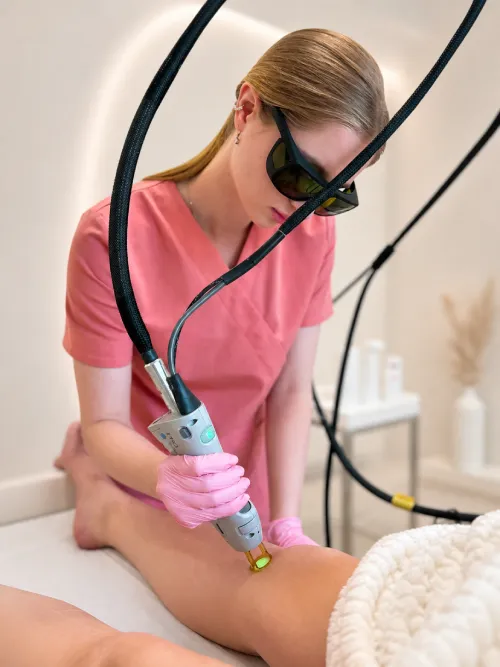
Contraindications to Laser Hair Removal – When Should the Treatment Be Postponed or Avoided?

Introduction
Laser hair removal is currently one of the most effective methods of long-term hair reduction. However, to ensure that the treatment is not only effective but also safe, it is essential to undergo a qualification consultation and rule out any possible contraindications before starting a series of treatments.
At EPIL STUDIO in Kraków, every client undergoes a detailed consultation before their first appointment, including questions about their health, medications, and skincare routine. This allows laser hair removal performed with the Candela GentleMax Pro and Lumenis LightSheer Quattro systems to be properly planned and tailored to each individual’s needs.
In this article, we explain the contraindications to laser hair removal, which of them are temporary and which completely prevent the treatment from being performed. You will also learn when it is safe to begin therapy and which situations require prior consultation with a specialist.
Table of Contents
- What are the contraindications to laser hair removal?
- Why is the pre-treatment qualification so important?
- Absolute contraindications to laser hair removal
- Temporary contraindications – when should the treatment be postponed?
- Which medications may increase the risk of adverse reactions?
- Is a tan a contraindication?
- Laser hair removal during pregnancy and breastfeeding
- Skin conditions and laser hair removal
- Do chronic diseases prevent laser hair removal?
- How does the laser hair removal qualification process work at EPIL STUDIO?
- Frequently Asked Questions
- Summary
At a Glance
- laser hair removal is safe when proper pre-treatment qualification is performed;
- contraindications may be permanent or temporary;
- many limitations are related to medications, active skin conditions, or a recent tan;
- before starting treatment, the specialist conducts a detailed medical consultation;
- at EPIL STUDIO in Kraków, every treatment plan is tailored individually using Candela GentleMax Pro and Lumenis LightSheer Quattro laser systems to maximise both safety and treatment effectiveness.
What Are the Contraindications to Laser Hair Removal?
Contraindications to laser hair removal are factors that may increase the risk of complications, reduce the effectiveness of the treatment, or temporarily prevent it from being performed. They may be related to your health, medications, skin condition, or your current situation, such as pregnancy or a recent tan.
Not every contraindication means you must completely give up laser hair removal. In many cases, it is enough to wait for a certain period or complete treatment before safely starting a course of sessions.
The most common groups of contraindications include:
- active skin conditions in the treatment area;
- medications and herbs that cause photosensitivity;
- a recent tan;
- pregnancy;
- certain chronic diseases that require medical consultation;
- active infections.
💡 EPIL STUDIO Specialist’s Tip
That is why a consultation before your first appointment is so important. It allows the specialist to determine whether laser hair removal can be performed safely or whether the treatment should be postponed.
Why Is the Pre-Treatment Qualification So Important?
Modern medical laser systems such as Candela GentleMax Pro and Lumenis LightSheer Quattro provide highly effective hair removal while maintaining a high level of safety. However, proper client qualification is essential.
During the consultation, the specialist assesses, among other things:
- your general health;
- chronic diseases;
- medications and dietary supplements you are taking;
- skincare products and dermatological treatments;
- skin phototype;
- the degree of tanning;
- hair type and colour;
- previous aesthetic medicine procedures performed in the treatment area.
This makes it possible to:
- reduce the risk of irritation and burns;
- select the appropriate laser settings;
- determine the best time to begin treatment;
- achieve the highest possible effectiveness throughout the entire treatment course.
💡 EPIL STUDIO Specialist’s Tip
Before every appointment, inform your specialist about any new medications, supplements, or treatments you have had since your previous session. Even seemingly minor changes may affect the safety of laser hair removal.
Absolute Contraindications to Laser Hair Removal
Although laser hair removal is considered a safe procedure, there are situations in which it should not be performed due to the client’s health and safety. Some contraindications are absolute, meaning that the treatment cannot be performed or requires prior approval from the patient’s treating physician.
At EPIL STUDIO in Kraków, every client undergoes a detailed consultation before starting treatment. This makes it possible to rule out contraindications and determine the most appropriate time to begin the treatment course.
The Most Important Absolute Contraindications to Laser Hair Removal
| Contraindication | Why is the treatment not performed? |
|---|---|
| Active cancer | The decision to perform the treatment can only be made by the treating physician after the completion of therapy or in individual cases. |
| Active skin infection (bacterial, viral, or fungal) | The laser may worsen inflammation and prolong the healing process. |
| Active herpes infection | The treatment may aggravate the lesions and increase the risk of spreading the virus. |
| Open wounds, burns, or recent skin injuries | The skin must be completely healed before laser hair removal can be performed. |
| Unexplained skin lesions requiring diagnosis | A dermatological examination is necessary to determine the nature of the skin lesion before treatment. |
Not every medical condition means you must permanently give up laser hair removal. Final qualification for treatment is always determined individually during a consultation at EPIL STUDIO Kraków.
💡 EPIL STUDIO Specialist’s Tip
If you are being treated by a dermatologist, oncologist, or another medical specialist, let us know during your consultation. If necessary, we will ask you to obtain approval from your treating physician before starting the treatment.
Temporary Contraindications – When Should the Treatment Be Postponed?
Not all contraindications mean that you must give up laser hair removal. In many cases, it is enough to wait for an appropriate period so that the treatment can be performed safely and deliver the expected results.
This most commonly applies to situations that affect skin sensitivity or increase the risk of irritation and pigmentation changes. That is why, during the consultation, the specialist always asks about any medications you are taking, recent cosmetic treatments, and your recent sun exposure.
The Most Common Temporary Contraindications to Laser Hair Removal
| Situation | Why should the treatment be postponed? | When can laser hair removal be performed? |
|---|---|---|
| Recent tan | Increases the risk of burns, pigmentation changes, and skin irritation. | After the tan has completely faded. |
| Taking photosensitising medications | The skin becomes more sensitive to laser energy. | After the treatment has been completed and the period recommended by the physician or medication manufacturer has passed. |
| Isotretinoin therapy (e.g. Izotek, Axotret) | Significantly increases the risk of complications and impaired healing. | After treatment has ended and the waiting period recommended by the physician has passed. |
| Chemical peel or fractional laser treatment | The skin requires complete regeneration before another procedure. | After the skin has fully healed. |
| Self-tanning products | May affect the skin’s response to laser light and make it difficult to select the correct laser settings. | After the product has been completely removed from the skin. |
| Severe skin irritation after hair removal or cosmetic procedures | Increases the risk of discomfort and adverse reactions. | After the irritation has completely resolved. |
| Vaccination | The body needs time to develop an appropriate immune response. | Usually after a few days, according to the specialist’s recommendations. |
The waiting period before treatment may vary depending on your health, the type of treatment you are receiving, and your skin’s individual response. The final decision is always made by the specialist during the consultation.
It is important to remember that temporary contraindications do not mean you have to give up laser hair removal. In most cases, it is enough to schedule your first or next appointment appropriately so that the treatment is both safe and effective.
⚠️ The Most Common Mistake
Some people assume that once the skin is no longer red, laser hair removal can be performed immediately. However, after certain medications or cosmetic procedures, the skin may remain highly sensitive even though it appears to have healed completely.
Which Medications May Increase the Risk of Adverse Reactions?
Some medications and dietary supplements can increase the skin’s sensitivity to laser light. This phenomenon is known as photosensitivity. In such cases, even a properly performed treatment may carry a higher risk of redness, irritation, or pigmentation changes.
However, this does not mean that every medication you take prevents you from having laser hair removal. The most important thing is to inform your specialist about all medications you are using, whether they are taken regularly or temporarily.

Medications and Products That Require Consultation Before Laser Hair Removal
| Medication or Product Group | Why Do They Require Caution? | What Should You Do Before the Treatment? |
|---|---|---|
| Isotretinoin (e.g. Izotek, Axotret) | May significantly increase skin sensitivity and prolong the healing process. | Inform the specialist when your treatment has ended and follow your physician’s recommendations. |
| Photosensitising antibiotics | May increase the risk of irritation and pigmentation changes after treatment. | Schedule laser hair removal after completing the course of treatment and following a consultation. |
| Anti-acne medications | Some products affect the condition and sensitivity of the skin. | Inform the specialist about your treatment during the consultation. |
| St. John’s wort and herbal supplements with photosensitising effects | May increase the skin’s reaction to laser light. | Tell the specialist about all dietary supplements you are taking. |
| Topical retinoids | May cause skin dryness and increase susceptibility to irritation. | Follow the specialist’s recommendations regarding the required break in using the product. |
The list of photosensitising medications is much longer. Before every appointment, it is important to inform the specialist about all medications, dietary supplements, and topical products you are using.
It is important to remember that not only the name of the medication matters, but also its dosage, the duration of treatment, and the area where the procedure is planned. Therefore, you should never stop taking any medication on your own before laser hair removal. Any decision about changes to your treatment should always be made by your treating physician.
💡 EPIL STUDIO Specialist’s Tip
Before every appointment, prepare a list of all medications, dietary supplements, and topical products you are using. This will allow the specialist to safely determine your eligibility for the treatment and choose the most appropriate time to begin your therapy.
Is a Tan a Contraindication?
Yes, a recent tan is one of the most common temporary contraindications to laser hair removal. This applies to sunbathing, using tanning beds, as well as applying bronzing cosmetics or self-tanning products.
Laser hair removal works by targeting the melanin found in the hair. When the skin is tanned, it also contains a higher amount of melanin, meaning that part of the laser energy may be absorbed by the epidermis instead of the hair follicle.
This may lead to:
- an increased risk of skin irritation;
- redness lasting longer than usual;
- hyperpigmentation or hypopigmentation;
- reduced treatment effectiveness;
- the need to adjust the laser settings or postpone the appointment.
How Do Different Types of Tans Affect the Possibility of Laser Hair Removal?
| Type of Tan | Can the Treatment Be Performed? | Recommendation |
|---|---|---|
| Recent tan after intense sun exposure | No | Wait until the tan has completely faded and the skin has returned to its natural colour. |
| Tan from a tanning bed | No | The treatment should be postponed until the skin has fully recovered. |
| Self-tanner or bronzing lotion | Usually no | The product should be completely removed from the skin before the treatment. |
| Naturally darker skin phototype | Yes | The specialist will adjust the laser settings according to the client’s skin phototype. |
A naturally darker skin phototype is not a contraindication to laser hair removal. The greatest concern is a recent tan, which increases the amount of melanin in the epidermis and may affect the safety of the treatment.
It is important to remember that you cannot always determine on your own whether your skin is properly prepared for treatment. Even if your tan appears to be minimal, the specialist will assess its extent during the consultation and decide whether laser hair removal can be performed safely.
💡 EPIL STUDIO Specialist’s Tip
If you are planning a holiday or intensive sun exposure, it is best to schedule your laser hair removal series well in advance. This helps maintain regular treatment intervals and avoids unnecessary appointment postponements.
Laser Hair Removal During Pregnancy and Breastfeeding
Pregnancy is not a disease; however, due to the lack of sufficient studies confirming the safety of laser hair removal during this period, the treatment is not performed on pregnant women.

Although there is no evidence that laser energy harms the developing baby, the accepted principle is to ensure maximum safety. For this reason, most aesthetic medicine and laser hair removal clinics postpone treatment until after pregnancy.
During pregnancy, hormonal changes may also affect:
- the rate of hair growth;
- the effectiveness of laser hair removal;
- increased skin sensitivity;
- a greater tendency to develop pigmentation changes.
For this reason, starting a treatment series after childbirth usually provides more predictable and long-lasting results.
Can Laser Hair Removal Be Performed While Breastfeeding?
Breastfeeding is not an absolute contraindication to laser hair removal. In many cases, the treatment can be performed provided there are no other medical contraindications.
Before starting treatment, the specialist considers, among other things:
- the client’s overall health;
- whether the postpartum recovery period has ended;
- the condition of the skin;
- any medications being taken;
- the area planned for treatment.
When treating the breast area, laser hair removal is usually postponed until breastfeeding has ended to avoid unnecessary irritation of this particularly sensitive area.
💡 EPIL STUDIO Specialist’s Tip
If you have recently given birth and are planning to start laser hair removal, let the specialist know during your consultation. They will assess whether this is the right time to begin treatment and prepare an individual treatment plan.
Skin Conditions and Laser Hair Removal
The condition of the skin has a significant impact on the safety of laser hair removal. Not every dermatological condition prevents treatment, but active skin lesions require prior assessment by a specialist.
Laser hair removal should most often be postponed in the case of:
- active skin inflammation;
- bacterial, viral, or fungal infections;
- active herpes infection;
- fresh wounds and abrasions;
- severe allergic skin reactions;
- unexplained pigmented lesions requiring diagnosis.
On the other hand, some chronic skin conditions, such as atopic dermatitis or psoriasis, do not always prevent laser hair removal. The deciding factor is whether active lesions are present in the area planned for treatment.
Before starting therapy, the specialist assesses:
- the appearance of the skin;
- the degree of skin regeneration;
- the location of skin lesions;
- the risk of adverse reactions.
This allows the treatment to be planned safely or postponed until a more appropriate time.
⚠️ The Most Common Mistake
Some clients try to conceal skin lesions with makeup or cosmetic products, hoping the treatment can proceed as planned. It is always better to inform the specialist about any skin changes. If necessary, the appointment will be postponed, helping to avoid complications and ensuring greater treatment safety.
Do Chronic Diseases Prevent Laser Hair Removal?
Not every chronic disease means that laser hair removal is impossible. In many cases, the treatment can be performed safely, provided the condition is well controlled and the client’s health allows the therapy to be carried out.
The most important factors are an individual assessment and an honest discussion with the specialist. During the consultation, it is important to inform them about all chronic diseases, medications you are taking, and any previous medical procedures.
Conditions that may require additional consultation include, among others:
- diabetes;
- thyroid disorders;
- autoimmune diseases;
- epilepsy;
- hormonal disorders;
- cardiovascular diseases.
The presence of a chronic disease alone does not automatically constitute a contraindication to laser hair removal. Much more important are the course of the disease, how well it is controlled, and the client’s current state of health.
Chronic Diseases and the Possibility of Laser Hair Removal
| Condition | Does It Prevent Treatment? | Notes |
|---|---|---|
| Diabetes | Not always | With well-controlled diabetes, laser hair removal can often be performed following an individual assessment. |
| Thyroid disorders | Usually no | They may affect the rate of hair growth but are generally not considered a contraindication. |
| Polycystic Ovary Syndrome (PCOS) | No | Laser hair removal can effectively reduce hair growth; however, hormone therapy may influence the number of treatments required. |
| Autoimmune diseases | Depends on the course of the disease | In some cases, consultation with the treating physician is necessary. |
| Epilepsy | Requires individual assessment | Particular caution is exercised in people with photosensitive epilepsy. |
Each case is assessed individually. If there are any doubts, the specialist may recommend a consultation with the treating physician before treatment.
💡 EPIL STUDIO Specialist’s Tip
Do not stop taking any medication before laser hair removal without consulting your physician. During your appointment, inform the specialist about all chronic conditions and current treatments so that your therapy can be planned safely.
How Does the Qualification for Laser Hair Removal at EPIL STUDIO Work?
The safety of laser hair removal begins even before the first laser pulse. That is why every client at EPIL STUDIO in Krakow undergoes a consultation to identify any contraindications and select the appropriate treatment parameters.

During the consultation, the specialist asks detailed questions about:
- your general health;
- chronic diseases;
- medications and dietary supplements you are taking;
- previous cosmetic and dermatological procedures;
- sun exposure and tanning bed use;
- your skin type and hair colour;
- previous experience with laser hair removal.
The treatment area and the condition of your skin are then assessed. This allows the specialist to adjust the settings of the Candela GentleMax Pro or Lumenis LightSheer Quattro laser to ensure maximum safety and treatment effectiveness.
If a temporary contraindication is identified during the consultation, the specialist will explain the reason and suggest the earliest suitable date to begin or continue your treatment series.
💡 EPIL STUDIO Specialist’s Tip
Before your first appointment, prepare a list of all medications and dietary supplements you are taking, and inform the specialist about any changes in your health, even if they seem insignificant. A thorough consultation is one of the key elements of safe and effective laser hair removal.
Frequently Asked Questions
Is a cold a contraindication to laser hair removal?
If the infection is accompanied by fever, weakness, or antibiotic treatment, it is best to postpone the procedure until you have fully recovered.
Can laser hair removal be performed during menstruation?
Yes. Menstruation is not a contraindication to treatment. However, some women may experience increased skin sensitivity during this time.
Can laser hair removal be performed after vaccination?
Yes, but it is recommended to wait a few days between vaccination and the procedure so that your body has time to respond properly to the vaccine.
Can laser hair removal be performed after taking antibiotics?
It depends on the type of antibiotic. Some antibiotics are photosensitising and require a waiting period before treatment. Always inform the specialist about all medications you are taking.
Are moles a contraindication to laser hair removal?
No. Pigmented moles are properly protected during the procedure, allowing laser hair removal to be safely performed on the surrounding skin.
Does psoriasis prevent laser hair removal?
Not always. If there are no active lesions in the treatment area, the specialist may qualify you for therapy.
Is atopic dermatitis a contraindication?
Not always. The treatment may be considered during periods of remission, when the skin has healed and there is no active inflammation.
Can laser hair removal be performed after cancer treatment?
In many cases, yes. However, the decision should be made individually after consultation with both the treating physician and the laser hair removal specialist.
Should I inform the specialist about new medications before every appointment?
Yes. Even if previous treatments were completed without any problems, starting a new medication may affect the safety of laser hair removal.
What should I do if I am not sure whether I can have the treatment?
The best solution is to schedule a consultation at EPIL STUDIO in Krakow. The specialist will conduct a detailed assessment, examine your skin, and determine whether there are any contraindications to starting or continuing treatment.
Summary
The purpose of contraindications to laser hair removal is above all to ensure safety and achieve the best possible treatment results. Some contraindications are permanent; however, the vast majority are temporary, and once the issue has resolved, the treatment series can be started or continued safely.
For this reason, a thorough consultation before your first appointment is extremely important, as is informing the specialist about any changes in your health, medications you are taking, and previous treatments. This allows the most appropriate treatment date and laser settings to be selected.
At EPIL STUDIO in Krakow, every qualification is carried out individually. Using the medical-grade Candela GentleMax Pro and Lumenis LightSheer Quattro lasers, treatments are performed safely, comfortably, and according to each client’s individual needs.
Book a Consultation and Find Out Whether You Can Start Laser Hair Removal
If you are unsure whether laser hair removal is suitable for you, book a consultation at EPIL STUDIO in Krakow. We will answer all your questions, assess your skin, evaluate any possible contraindications, and prepare a personalised treatment plan tailored to your needs.
Key Takeaways
- not every contraindication means you have to give up laser hair removal;
- in most cases, the treatment only needs to be postponed until temporary contraindications have resolved;
- before every appointment, inform your specialist about any new medications, dietary supplements, and changes in your health;
- a recent tan, certain medications, and active skin infections may require postponing the procedure;
- a professional consultation before treatment improves both the safety and effectiveness of laser hair removal.
Want to Learn More About Laser Hair Removal? Read our other guides about preparing for treatment, the number of sessions required, and the comparison between laser hair removal and electrolysis.
Related Articles
- How to Prepare for Laser Hair Removal?
- Laser Hair Removal – How Many Sessions Are Needed?
- Laser Hair Removal or Electrolysis – Which Should You Choose?
- Laser Hair Removal Price List.
- Contact EPIL STUDIO.
Author
EPIL STUDIO Kraków Team
This article was prepared by the EPIL STUDIO in Krakow Team based on current medical knowledge, recommendations from international organisations, and practical experience in laser hair removal and electrolysis.